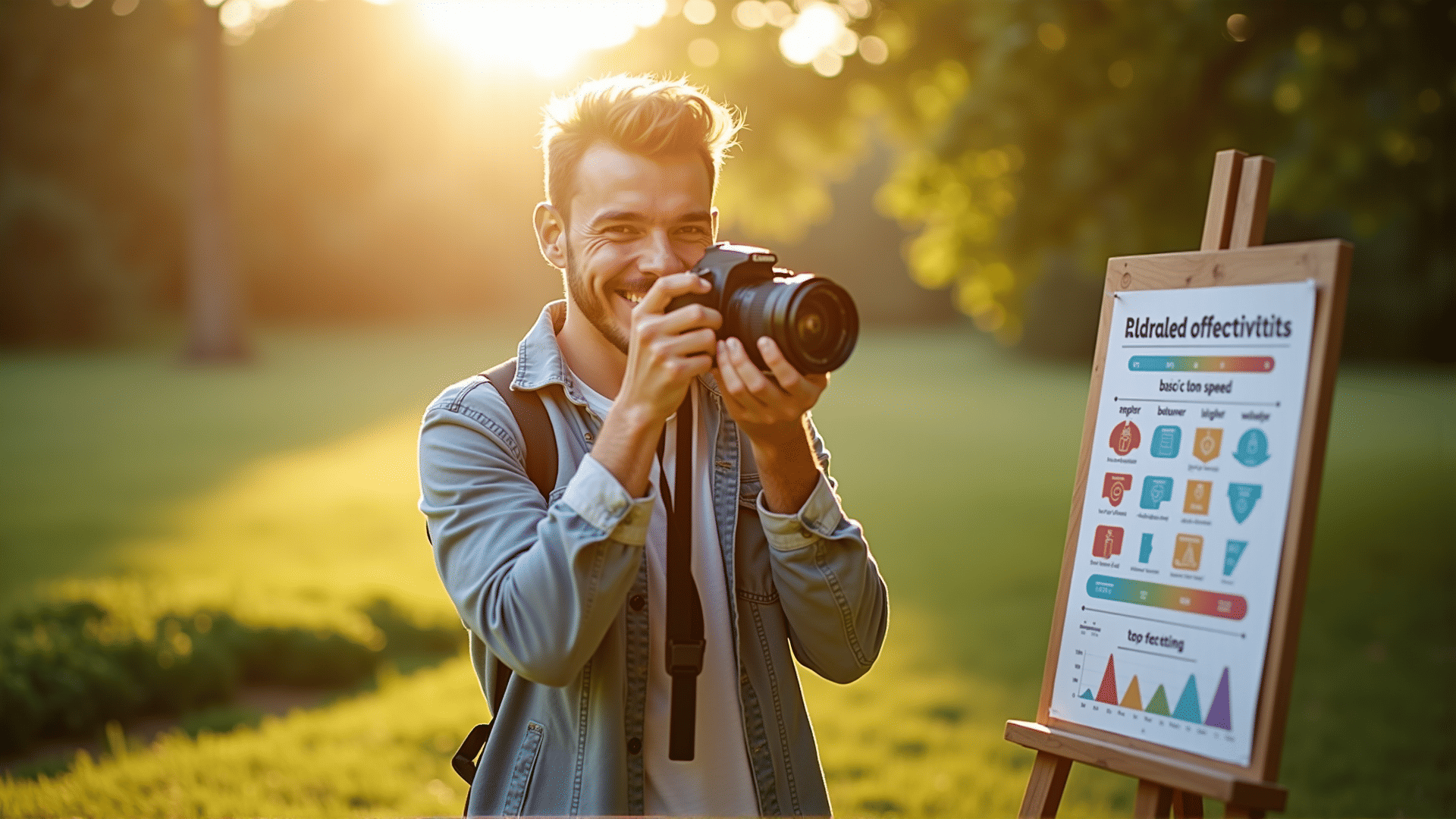
Photography is an art form that allows individuals to capture moments in time and express creativity through imagery. Whether you're using a high-end camera or capturing scenes with a smartphone, understanding the basics of photography can significantly enhance the quality of your photos. Here are some fundamental techniques to help you on your journey to taking stunning photographs.
Understanding Exposure
Exposure is the amount of light that reaches the camera sensor. It is controlled by three key elements: aperture, shutter speed, and ISO. Balancing these elements is crucial for achieving well-lit photographs.
-
Aperture: This setting controls the size of the lens opening. A wider aperture (lower f-number) allows more light in and creates a shallow depth of field, resulting in a blurred background. This is perfect for portraits.
-
Shutter Speed: This determines how long the camera’s shutter is open. Faster shutter speeds can freeze action, which is ideal for sports photography, while slower speeds can create motion blur, useful for capturing movement in creative ways.
-
ISO: This controls the camera's sensitivity to light. A lower ISO setting is best for bright conditions, while a higher ISO is ideal for low-light settings. However, increasing ISO can introduce noise, which may reduce clarity.
Composing a Shot
Composition is the arrangement of elements within your photograph. Good composition draws the viewer's eye and conveys the intended message or emotion.
-
Rule of Thirds: Imagine your frame divided into nine equal segments by two vertical and two horizontal lines. Placing your subject along these lines or at their intersections can create more balanced and interesting photos.
-
Leading Lines: Use natural lines in the scene to guide the viewer’s eye towards the main subject. Roads, rivers, and fences are excellent examples of leading lines.
-
Framing: Incorporate elements around the edge of the composition to help isolate the main subject. This technique creates depth and draws attention directly to the focal point.
Lighting and Color
Understanding how lighting affects your photograph is essential. Natural light can bring out colors and details, but it’s essential to know how to use it to your advantage.
-
Golden Hour: Photographs taken during the early morning or late afternoon have a warm, soft quality. This time, known as the “golden hour,” is ideal for capturing flattering and visually appealing images.
-
Color Balance: Be mindful of the color tones in your image. Adjust the white balance settings to ensure your photos reflect colors accurately. This is particularly important in conditions where artificial lighting can skew colors.
Mastering Focus
-
Autofocus vs. Manual Focus: While autofocus is convenient, learning to use manual focus can allow for more precise control, especially in tricky lighting or when capturing intricate details.
-
Depth of Field: Control how much of your photograph is in focus by adjusting your aperture settings. A shallow depth of field (large aperture) is excellent for isolating subjects from backgrounds, whereas a deeper depth of field (small aperture) is suited for landscape photography.
Post-Processing
Editing your photos is an essential part of the photography process. Post-processing allows you to enhance your images, correct errors, and bring your artistic vision to life.
-
Cropping and Straightening: Compose your final image by removing unwanted elements and correcting the horizon line if needed.
-
Adjusting Exposure and Contrast: Fine-tune lighting and shadows to create a balanced composition.
-
Color Correction: Ensure the colors are consistent with your artistic vision and make adjustments to saturation and vibrance as needed.
By mastering these fundamental photography techniques, you can significantly improve the quality and impact of your images. Whether you capture everyday moments or breathtaking landscapes, understanding the elements of exposure, composition, lighting, and focus will help you create compelling and stunning photographs. Remember, practice is key, and the more you experiment, the more you will refine your skills.